
When we pulled Luke from public school to homeschool him, I went through a “what in the world did we just do” period like so many parents tell me they’ve felt. Even after Luke’s traumatic public school experience, I still wasn’t 100% convinced that I would do a great job. My degrees were not in education or any special education related field. In hindsight, I don’t think my self-doubt was a bad thing. I had, and still have, a healthy respect for the responsibility of homeschooling my autistic child. He was only in first grade when we withdrew him from school and was eligible to attend public school until the age of 21. The next 14 years of his education were on us now. Feeling the weight of that choice was appropriate, so if you’re feeling that weight too, congrats! You’re normal.
I also noticed that there wasn’t much guidance out there about how to homeschool a level 3 autistic child. What did an average day look like? What resources did people use? I realized that every child was different, but any direction would have been helpful. That’s exactly why I decided to write about my experience.

I started homeschooling Luke in February 2024 when he was 7 and I’m happy to say that at 9 and about to enter the 3rd grade, Luke is thriving and progressing more than we ever thought possible. I took the parts I liked about special education in public school and blended them with what I had read and learned, the advice I got from Luke’s OT and speech providers, and then combined all that with what I knew about Luke as well as my own instincts. Basically, there’s no guidebook that tells you how to do this. Every family’s approach is different, as it should be. But if you’re looking for ideas, here is what homeschooling our level 3 autistic son looks like.
We Have a Routine
Listen, it’s not a strict routine, but consistency prevents meltdowns and that’s always the goal. Luke has a dry-erase board that I use to communicate the day of the week, the weather, what we’ll be doing that day, and what tasks we’ll be doing during homeschool that day. Do we deviate from the schedule? Of course! But having a visual schedule not only prepares Luke for the day, but it also helps me to stay focused, especially while homeschooling two other kids.
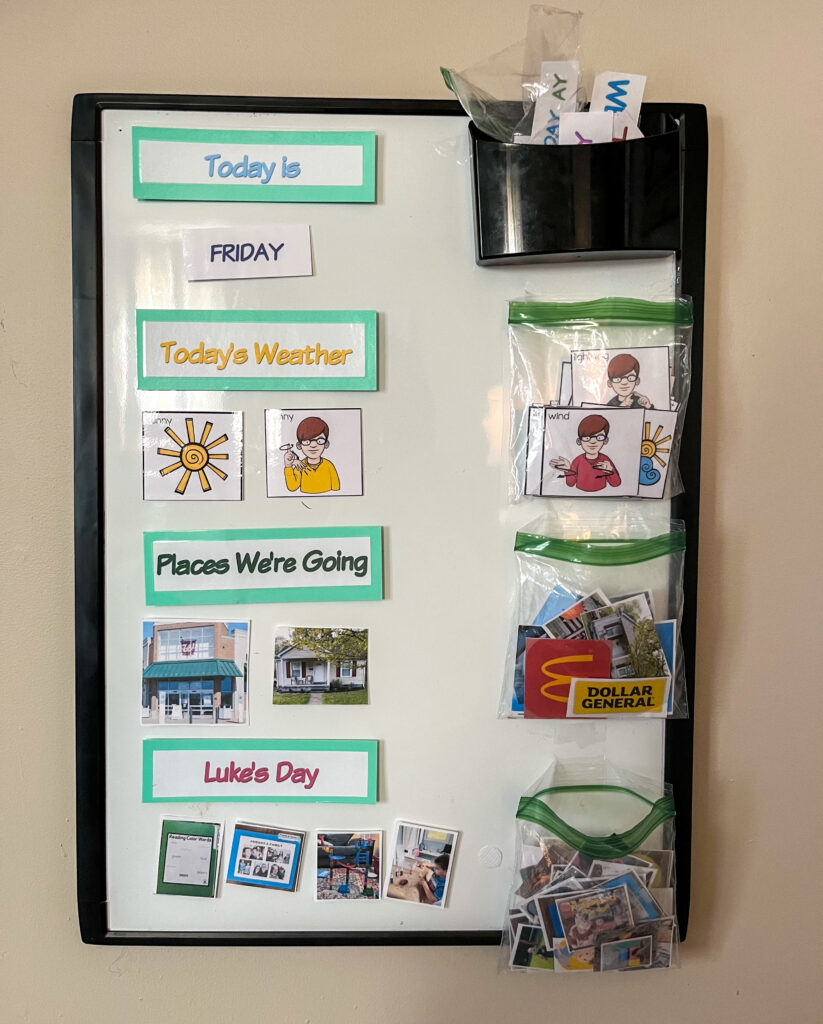
All you need to create this set-up is a dry-erase board, a laminator, Velcro dots, pictures of the places you go most often and the activities you usually do, days of the week printed out, and any other pictures that would be helpful to your child.
Outdoor Play
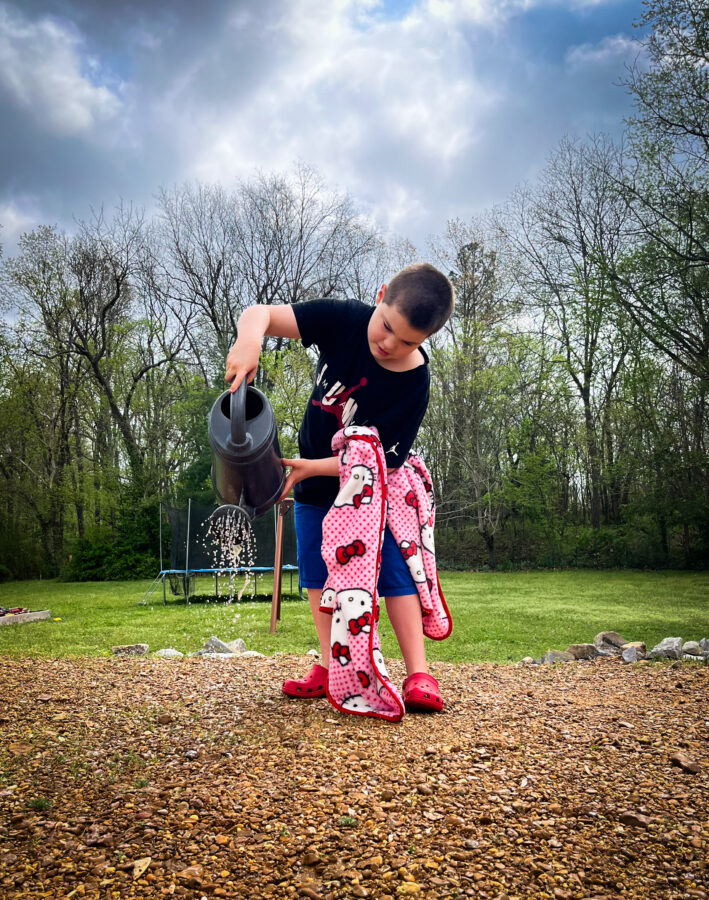
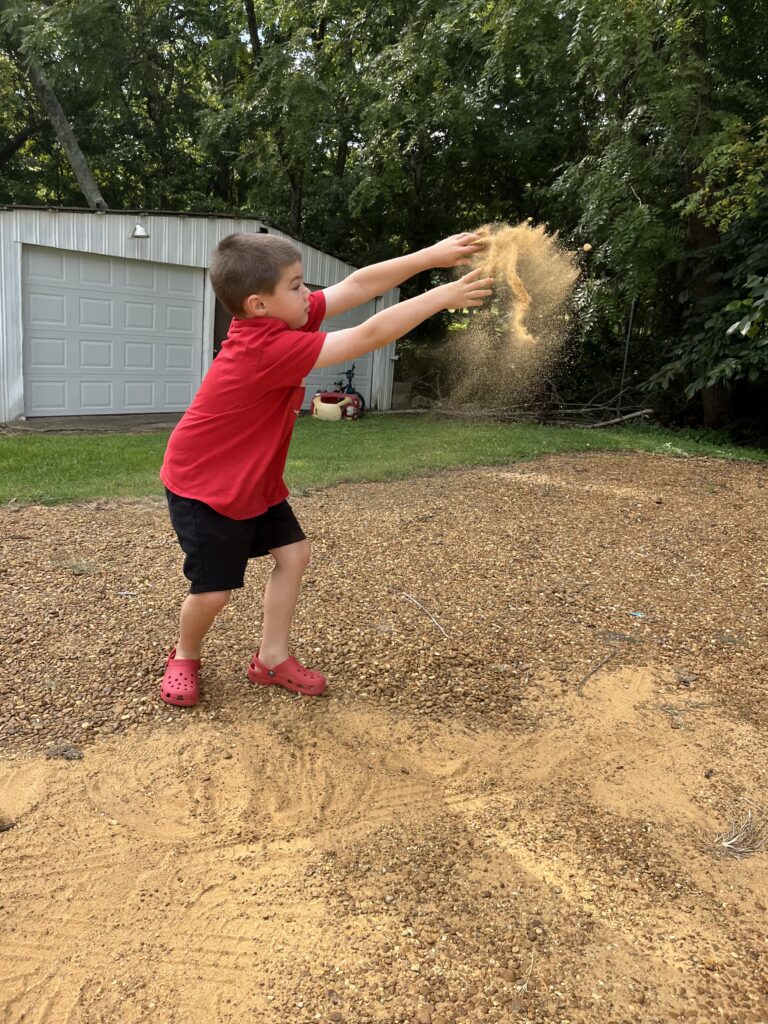
I can not emphasize enough how important play is for children, especially autistic children and especially outdoors. Natural elements like wind, sunlight, grass, the sound of birds and other wildlife provide organizing feedback that is great for nervous system regulation. Adding elements like dirt, sand, rocks and water only enhance the child’s sensory experience. Why is that important? When an autistic child’s nervous system is regulated, they can learn. They can connect. They can explore. They feel balanced and safe. Meltdowns are fewer and less intense. Luke and I spent so much time outside during that first month of homeschool. Within days, I could tell a difference in his anxiety and aggressiveness. Within a week, he was saying more words and smiling more. There’s just something magical about outdoor play.
Indoor Play
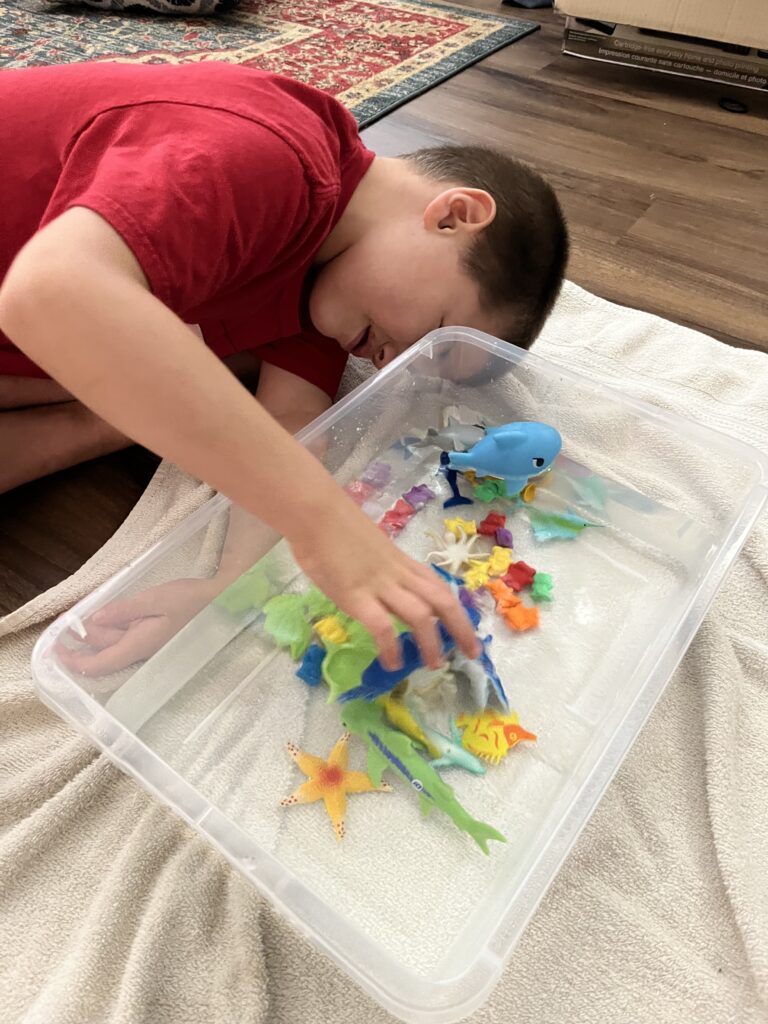
Indoor play is just as beneficial. Full disclosure, it’s something that we’ve had to be very intentional about. It’s easy to make him leave his tablet inside when we play outside. It’s a lot harder when we’re inside. We’ve reduced Luke’s screen time A LOT over the past year, but he’s still on his tablet a lot. Making sure that his toys are available and organized has made it much easier to switch gears without a meltdown. It also helps when one of us is sitting on the floor initiating play. Some of his favorites are playing with his toys in a water bin, putting together puzzles, and playing with hot wheels.
Open-Ended Activities
Outdoor play can be spontaneous and just for fun, or it can be used as part of an open-ended activity. Open-ended activities are child-led with no set procedures, strict rules or pre-determined outcomes. On the surface, they look no different than kids just playing like they normally would. The difference is that I am deliberate about setting up the environment and materials. They choose what they want to play with, how they play and my role is to facilitate and observe.
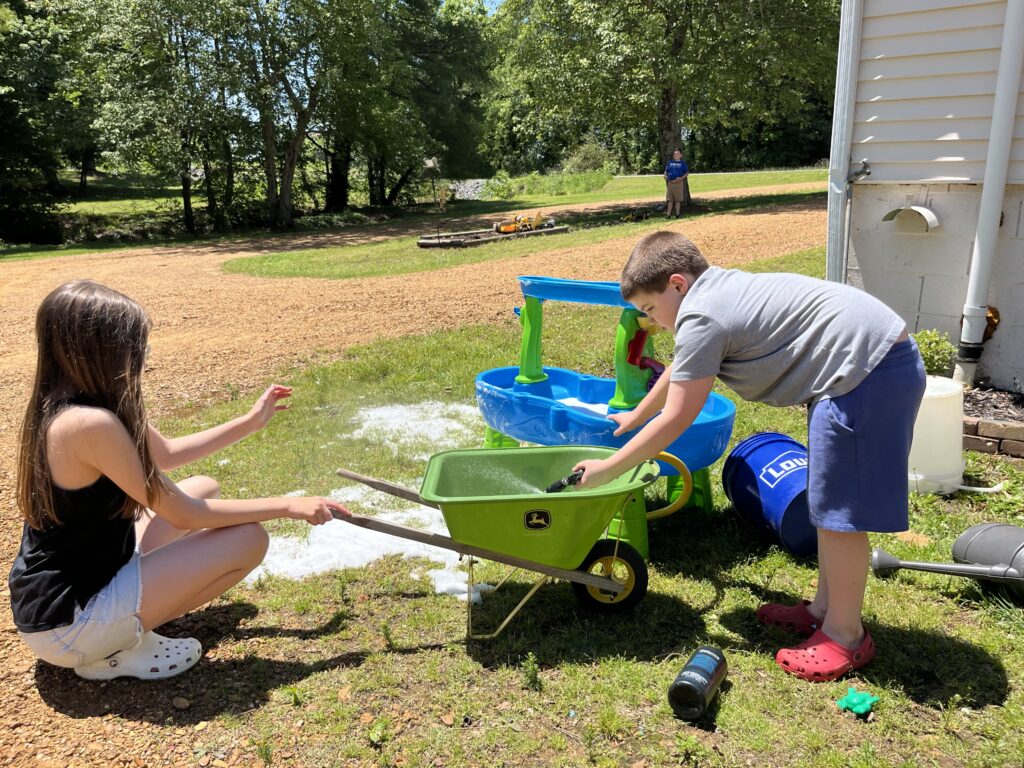
The picture above is the perfect example of an open-ended activity. I set up a variety of containers, buckets and his water table, along with the hose and a bottle of shampoo. Then I stood back and watched how he interacted with the materials. He filled two buckets with rocks, filled the watering can with just water, and added soap to the wheel barrel and the water table. When the wheel barrel got full, he would dump it out. He liked to let the water table overflow.
In observing this without a goal in mind, I was able to watch how Luke categorized materials, and how he executed his vision for all of the separate parts. I also noted things like fine motor practice (squeezing the shampoo bottle and picking up the rocks) and gross motor activities like dumping the buckets and the wheel barrel. Because open-ended play is self-directed, Luke usually stays engaged longer in the activity. Without a fixed goal in mind, I can fully observe Luke in his element.
Close-Ended Activities
Close-ended activities are tasks with a specific goal in mind, clear steps to completion and a definite endpoint. They’re easy to prepare and complete and can be done anywhere. Working toward a single outcome is great for improving concertation and attention as long as the task is developmentally appropriate (otherwise it can be boring or too frustrating). Progress and mastery is easy to measure with close-ended activities but sometimes engagement can be a challenge.
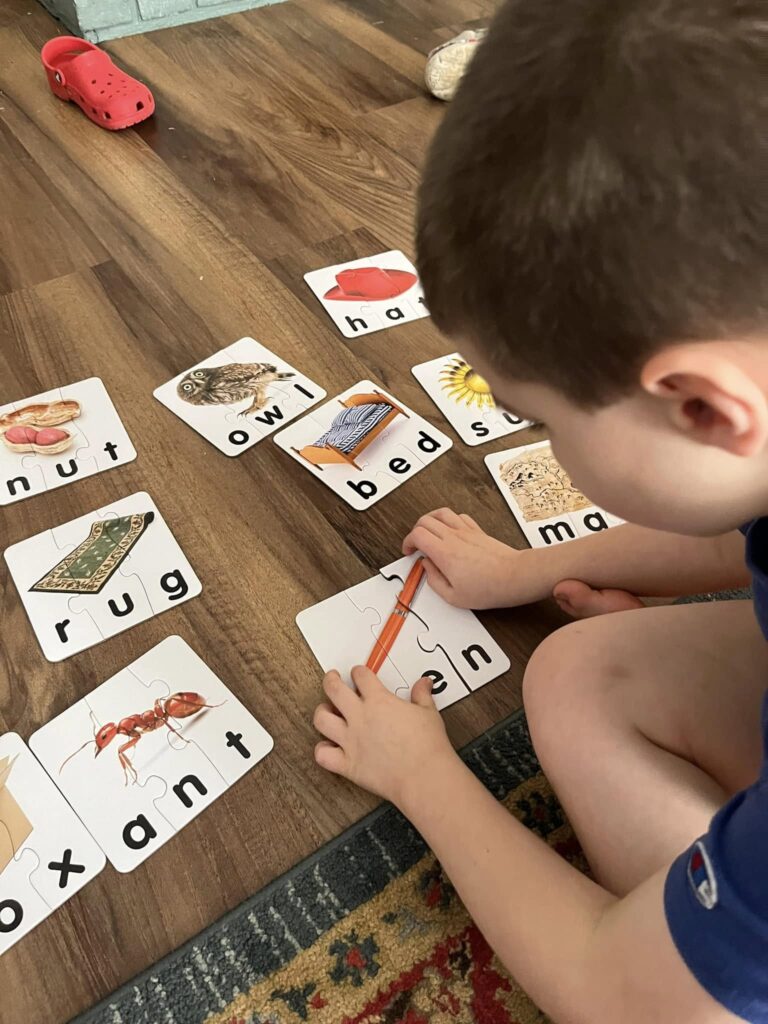
I like having a mix of open-ended and close-ended activities for Luke just like I do for myself. Somedays I like to lose myself in a creative home project. Other days, I like the satisfaction of cleaning a room or organizing for an hour. Kids are no different and both are great for their brains. Here are just a few examples of some close-ended activities we use.
File Folder Activities
Some of Luke’s favorite close-ended tasks are file folder activities. Just like the title suggests, these are tasks that cover a variety of topics and are created with laminated pictures and words and Velcro dots that fit neatly in a file folder. We’ve been working on building literacy with Luke so I made a few picture-to-word matching file folder activities on Canva using his favorite Pixar characters. This makes it relevant to his life and he enjoys them.
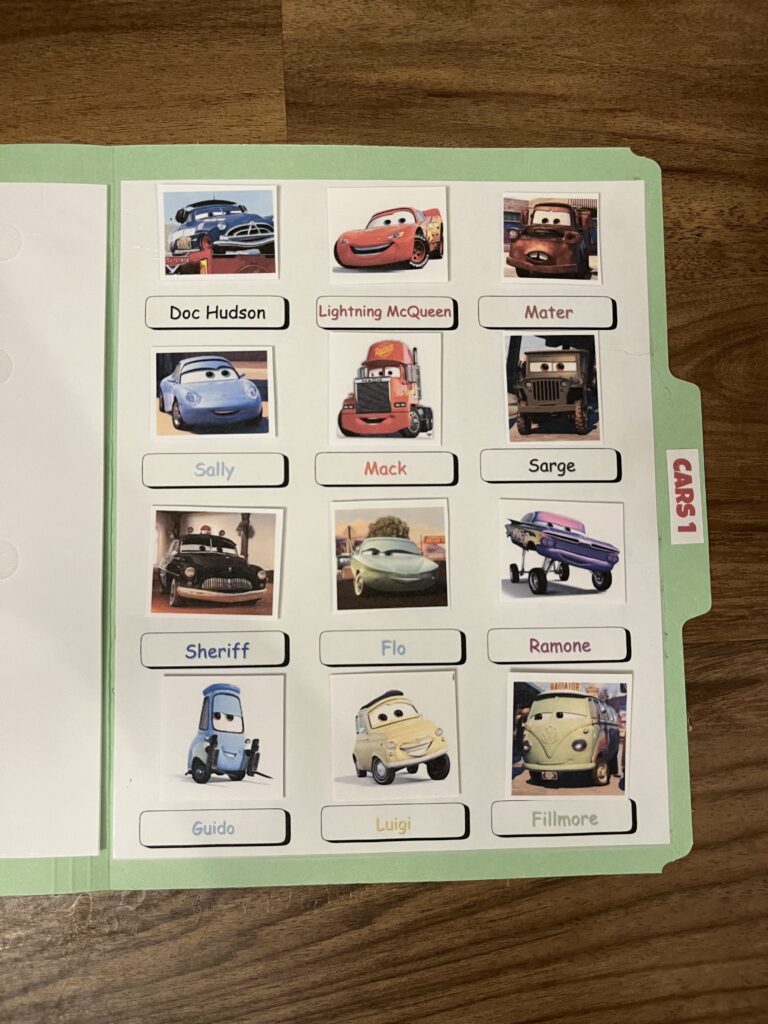
There are also a lot of great file folder activities on TPT that are not just limited to word recognition and matching. Here are a few of my favorites:
Simply Visual-Spelling and Reading Color Words
Simply Visual-File Folder Activities for Basic Skills Bundle
Adapting for Autism-One to One Correspondence Math Folders
Sunnyside Children’s Clinic-WH Questions with Pictures-3 Levels
The Village–Plant or Animal Sort
Reaching Exceptional Learners–File Folder Bundle
Task Boxes
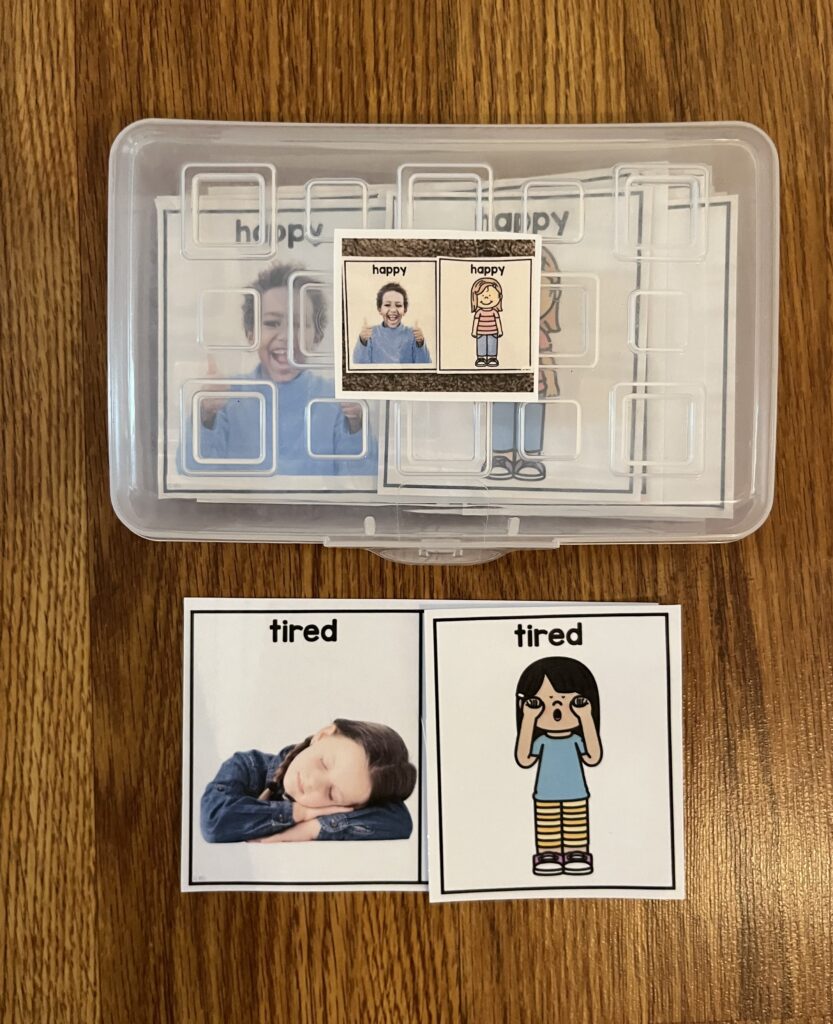
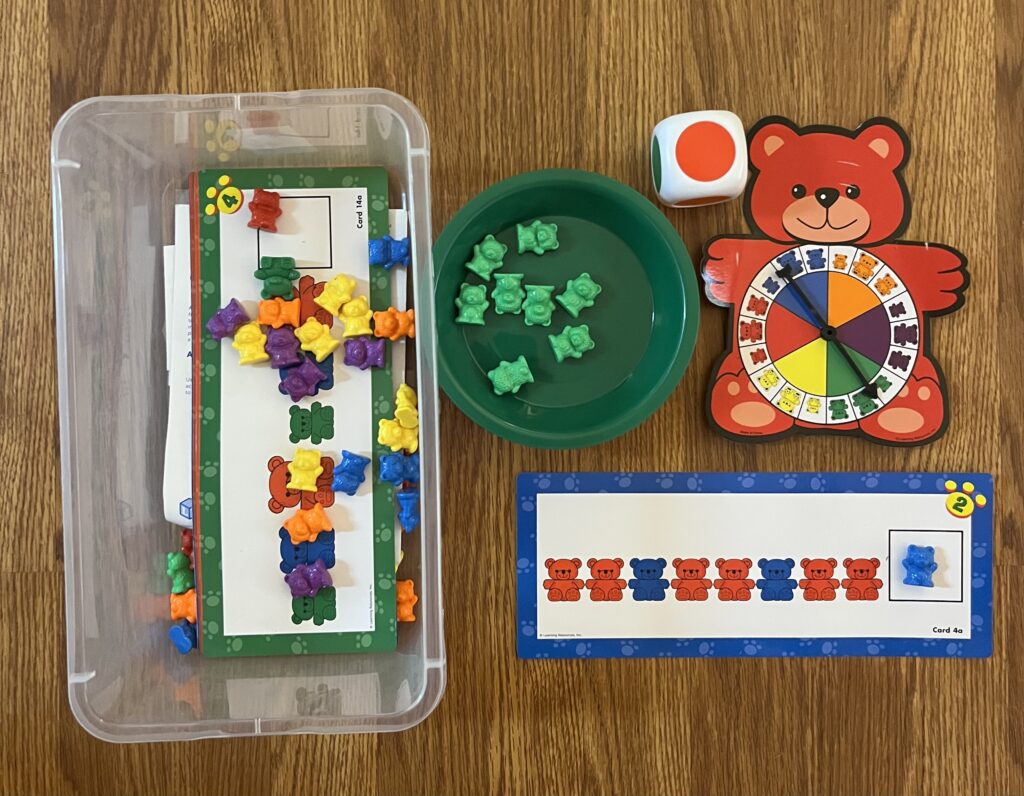
Task boxes are activities contained in a small pencil box or storage container that holds the materials to work on a certain skill. They can be printable tasks like ones you would find on TPT, they can be manipulatives, games, or even toys. Here are a few of the ones I use with Luke.
Puzzles
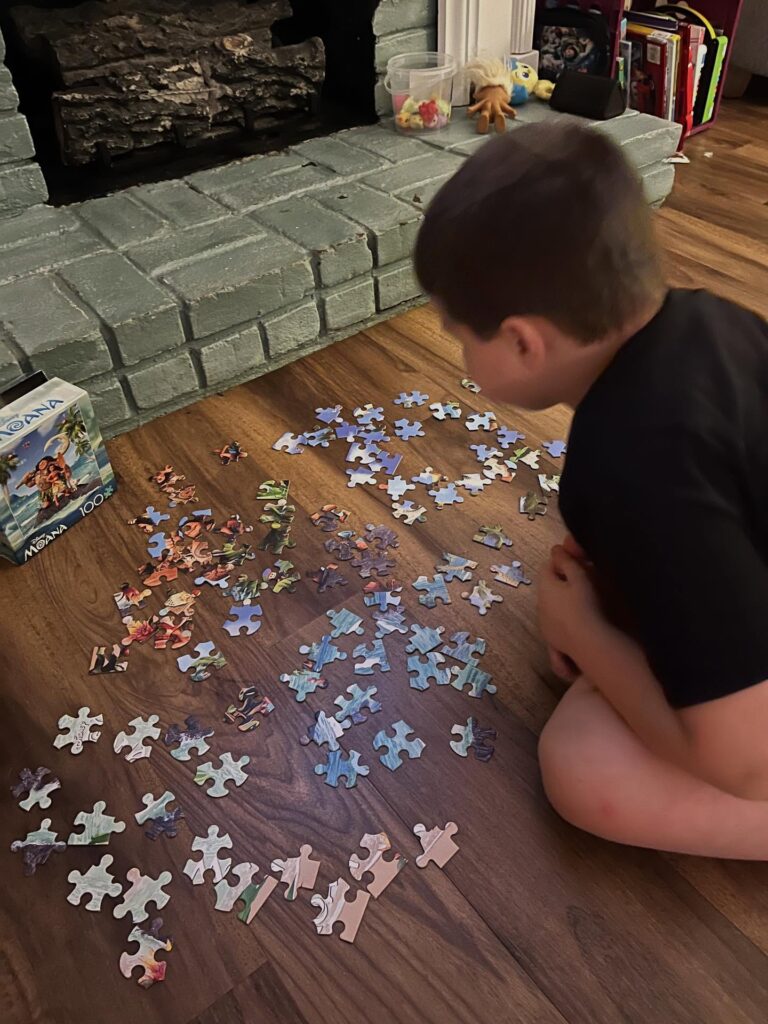
Puzzles don’t get enough credit. There are so many cognitive benefits–they improve short-term memory, force different parts of the brain to work together which strengthens neural pathways, they improve visual-spatial awareness and they’re great for building logic and analytical skills. To Luke, it’s just play. But there’s so much more going on behind the scenes and the best part is that he loves them.
He Participates With His Siblings
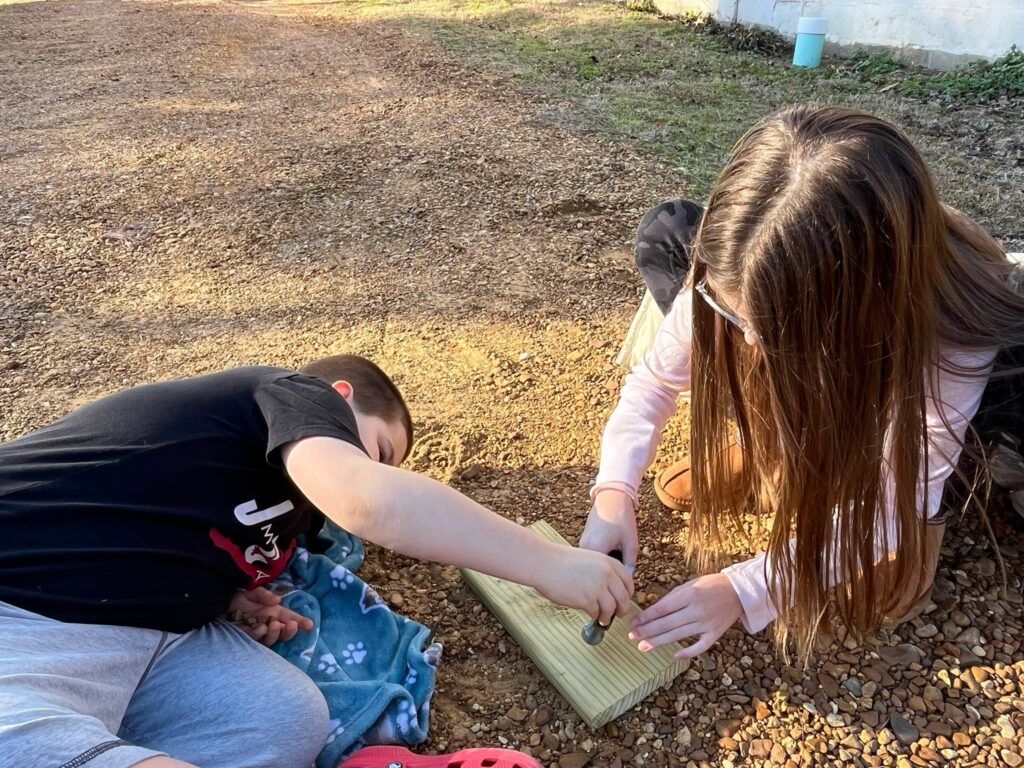
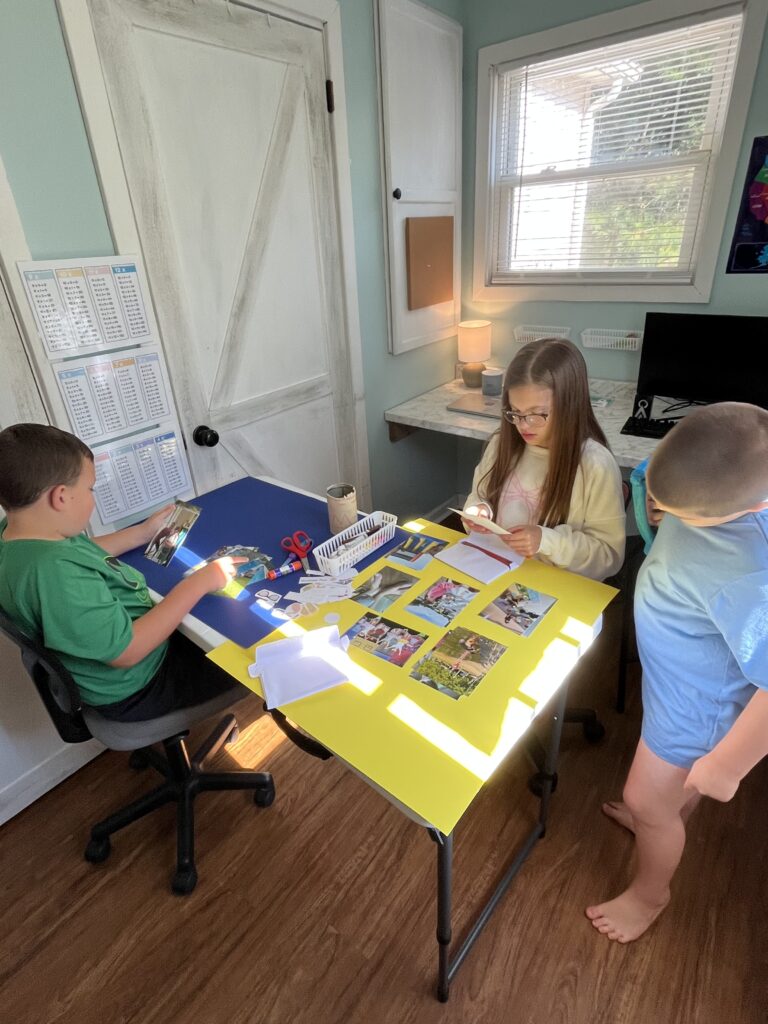
Luke might not be able to fully understand or complete the activities that Jack and Emmie are working on, but you better believe he likes to be a part of the action. Exposure is the first step to learning something new anyway. Unless an activity would pose a safety risk to Luke, I let him join in. He loves observing what the other ones are up to, and sometimes he gets brave enough to try it himself.
I Take A Ton of Notes
Taking notes is such a great way to track progress and also helps me remember the different things I’ve tried. I take notes a couple of different ways. I keep a notebook with me and jot down everything from new words he says to how he responds to different activities or new toys he’s drawn to. I love being able to look back after a few months and see how much progress Luke has made.
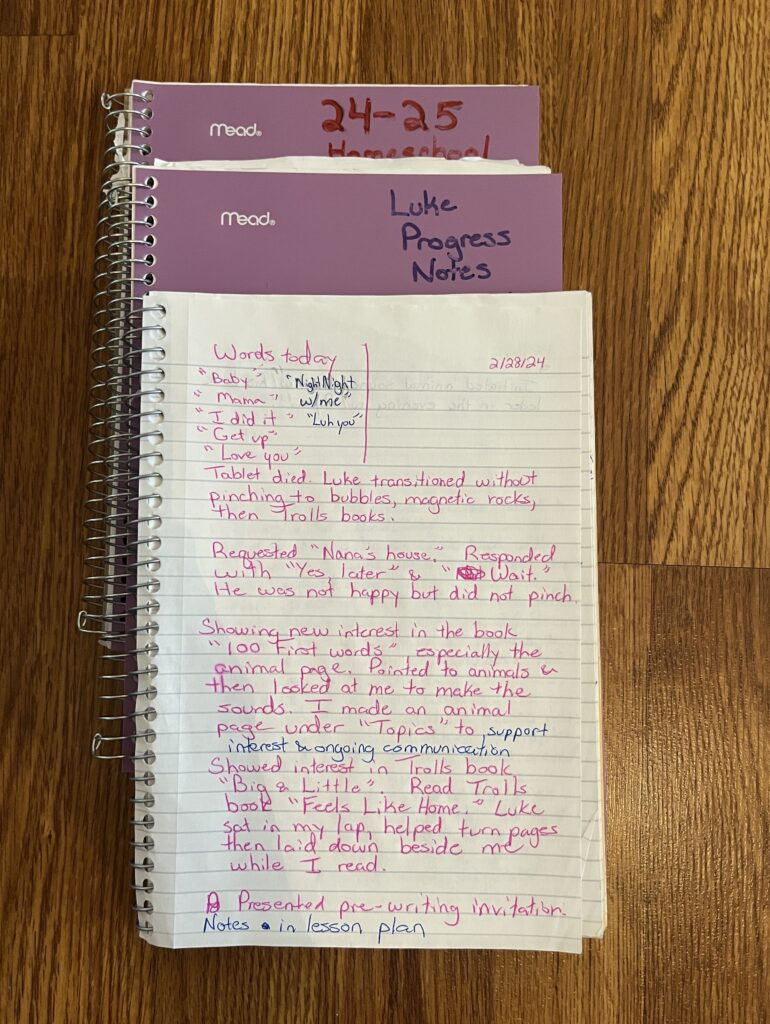
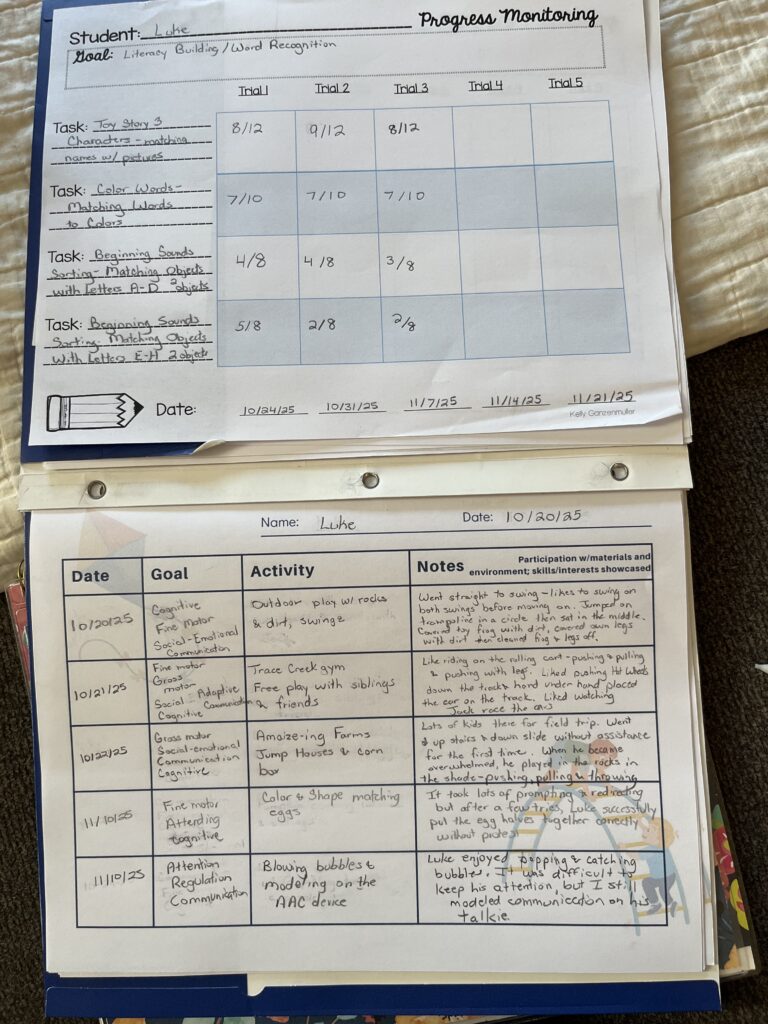
Once I had several months of notes, I was able to set goals for him. I still use my notebook but I also track his goals in two different ways. Now listen, I’m a data nerd. I live for it. It’s not a homeschool requirement, it’s just who I am.
For close-ended activities, I use these handy progress monitoring sheets from Kelly Ganzenmuller on TPT. They come in print and digital formats. For open-ended activities, I made my own progress monitoring sheets (inspired by my dear friend Jessica Branch). I’m old school so I like handwritten notes over digital record keeping.
Goals are Based on All Those Notes
In Kentucky, you don’t need to have an IEP for your child. Homeschools operate as private schools where parents assume full responsibility for instruction. Public school districts are not required to provide an IEP for home schools, but parents can choose to coordinate with their district for special education evaluations or services. Some parents make an IEP, some say that homeschool is the IEP.
I make an IEP each school year, but it’s much more simple and straightforward than one you would find in public school. I include current levels, strengths and challenges, and about 4-5 goals we want to work on for the year. I also attach his OT and speech therapy progress notes and goals.
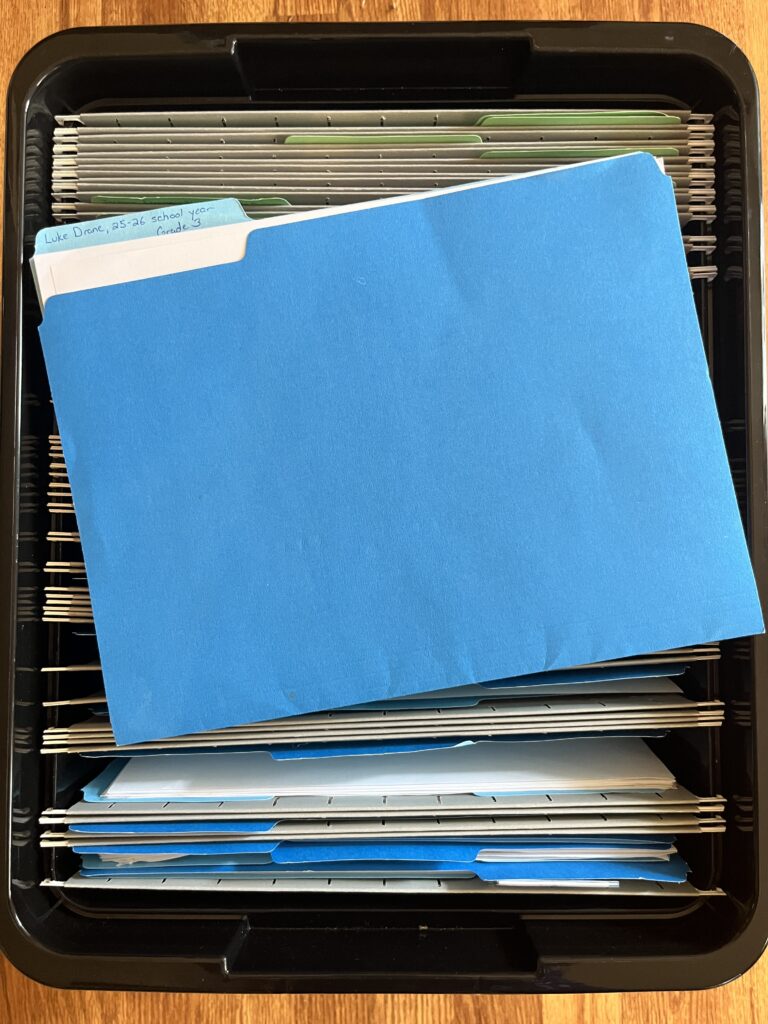
At the end of the academic year, I make a year-end summary and write about Luke’s progress, whether or not we achieved our goals, other things we accomplished or challenges we faced, and a few things I want to keep in mind for the following school year. More than anything, it acts as a guide for me, helping to keep me focused and accountable during the school year. I keep both his IEP and year-end summary in his file for that academic year.
Make It Your Own
You know yourself and your child better than anyone. Whether what I’ve shared feels like something you could see yourself doing or it looks a lot different than what you would do, you get to decide. Homeschooling allows parents the opportunity to craft our children’s education to meet their unique needs. The sky’s the limit on what you can do and what they can learn. For more homeschooling ideas, check out the Homeschool page. I also have an Autism page with lots of resources for you.